Lisbon’s elegant squares and winding streets have centuries of stories, about everything from maritime empires to earthquakes.
On this walking tour, you’ll explore the city’s dramatic past through its architecture, neighborhoods, and the characters who shaped it, discovering how disaster, ambition, and resilience built the capital you see today.
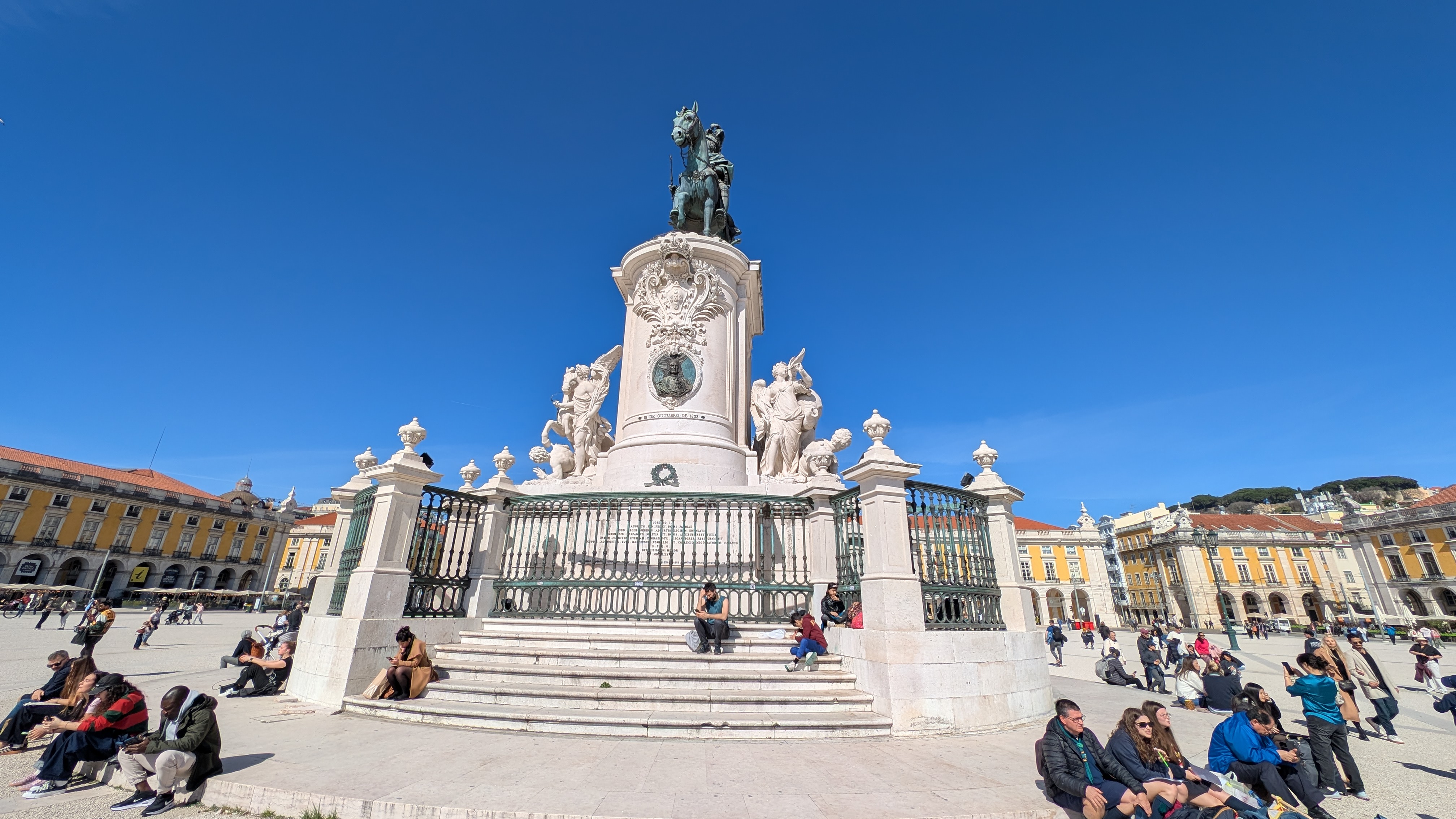
The tour starts at Praça do Comércio, the riverside square where Vasco da Gama’s fleet departed for India in 1497. You’ll pass through the triumphal arch and walk through Pombal’s orderly Baixa district, rebuilt on a grid after the 1755 earthquake. You’ll make your way down pedestrianized Rua Augusta with its distinctive hand-cut stone pavements, and reach São Domingos Church, site of the 1506 massacre when religious intolerance sparked three days of violence.
You’ll climb toward Bairro Alto, where cobbled streets and iron balconies reveal a neighborhood untouched by reconstruction. You’ll hear about its evolution from printing press hub to Fado birthplace. The tour ends at A Brasileira café, where Lisbon’s intellectuals have gathered since 1905.
On this 90-minute walk, you’ll also have a chance to:
- Decode the symbolism of King José I’s statue, where his horse tramples snakes representing crushed disasters
- Sample ginjinha, a traditional cherry liqueur, at a 200-year-old shop where shots cost just €1
- Discover Figueira Square’s transformation from earthquake-destroyed hospital to open-air herb market
- Hear how Lisbon became Europe’s espionage capital during WWII, with agents filling cafés and casinos
- Walk Rua da Rosa, named after a painted flower when many residents couldn’t read street signs
- Visit Cervejaria Trindade, a former monastery refectory turned 1834 brewery with spectacular 1863 tiles, and São Roque Church, built atop a plague cemetery
- Cross into Chiado and access the Elevador de Santa Justa viewing platform
- See the House of the Tablets, covered in Masonic-themed tiles representing Commerce, Industry, and Agriculture
This walk reveals Lisbon’s layered history through the neighbourhoods where it actually happened, one hill at a time.


Reviews
There are no reviews yet.