If there is one place in Portugal where the legend of the Knights Templar still feels alive, it is the town of Tomar. Rising above the town is the remarkable Convent of Christ, a fortress-monastery built by warrior monks whose power once stretched across Europe and the Holy Land.
Their story in Portugal is one of faith, war, political survival—and mystery.
The Formation of the Knights Templar
The Knights Templar were founded in 1119 in the aftermath of the First Crusade. A small group of French knights led by Hugues de Payens pledged themselves to protect Christian pilgrims travelling to Jerusalem.
Unlike ordinary knights, the Templars were monks as well as soldiers. They took vows of poverty, chastity and obedience, living under a strict religious rule approved by Bernard of Clairvaux.
But the order soon became far more than bodyguards for pilgrims. They built castles, fought in crusades, and created a network of wealth and land across Europe. They also developed one of the earliest international banking systems, allowing pilgrims to deposit money in Europe and withdraw it in the Holy Land.
In short, they became one of the most powerful organisations in medieval Christendom.
The Templars Arrive in Portugal
During the Reconquista, when Christian kingdoms were pushing Muslim rule out of the Iberian Peninsula, the Portuguese king Afonso I of Portugal needed skilled warriors to defend newly conquered lands.
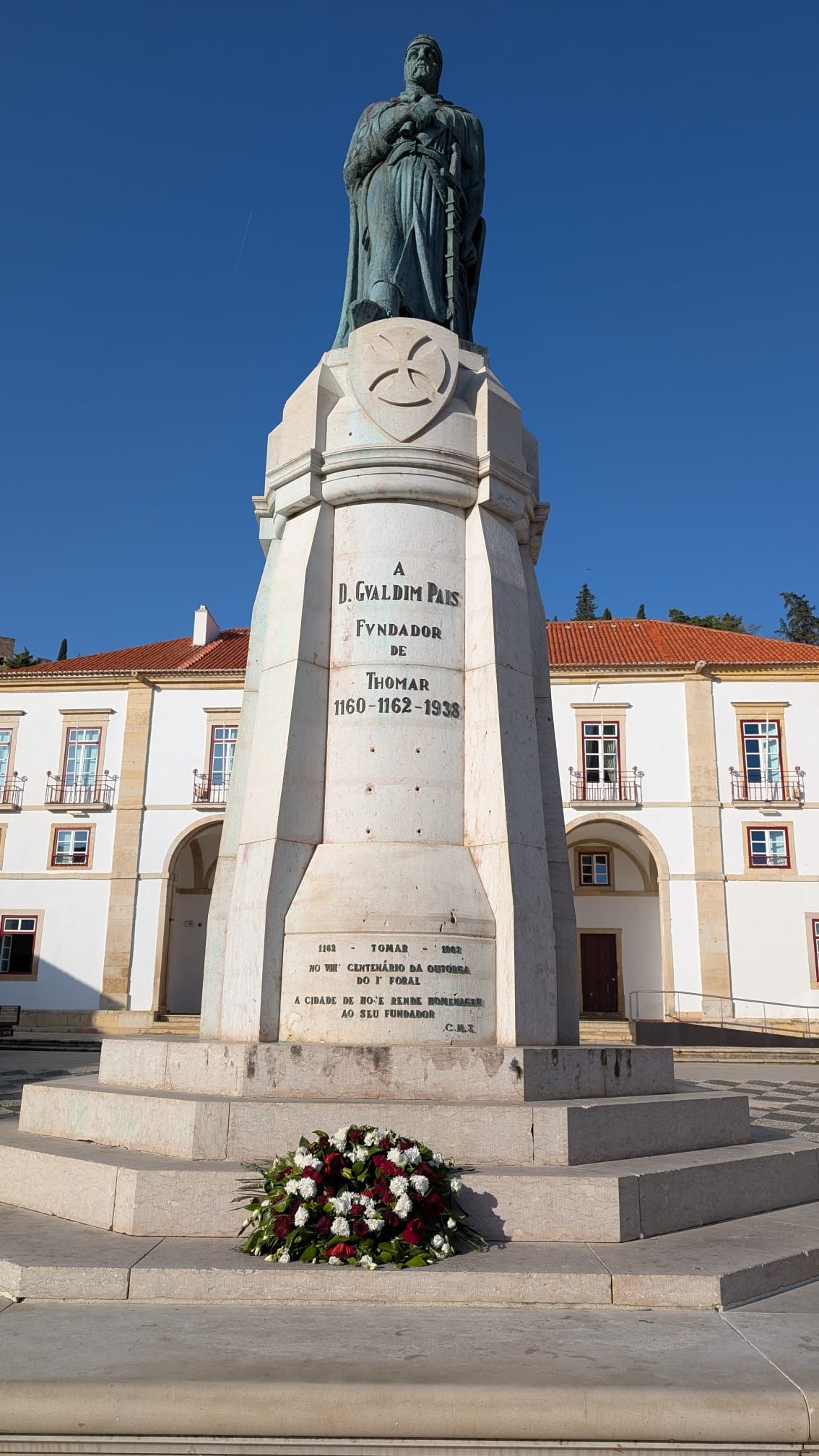
In 1128, he invited the Templars to Portugal and granted them territories along the frontier.
Their most famous foundation came in 1160, when the Templar Grand Master in Portugal, Gualdim Pais, established the town of Tomar and began constructing a powerful fortress.
This fortress would become the Templar headquarters in Portugal.
At its heart stood the remarkable Charola, a round church inspired by the Church of the Holy Sepulchre in Jerusalem. This design allowed knights to ride on horseback during religious ceremonies—a strange but fitting symbol for warrior monks.
The Siege of Tomar (1190)
The fortress of Tomar was soon tested.
In 1190, the powerful Almohad ruler Abu Yusuf Yaqub al-Mansur launched a massive campaign to retake Christian territories in Portugal.
His army swept through the region, destroying towns and castles.
Tomar was surrounded.
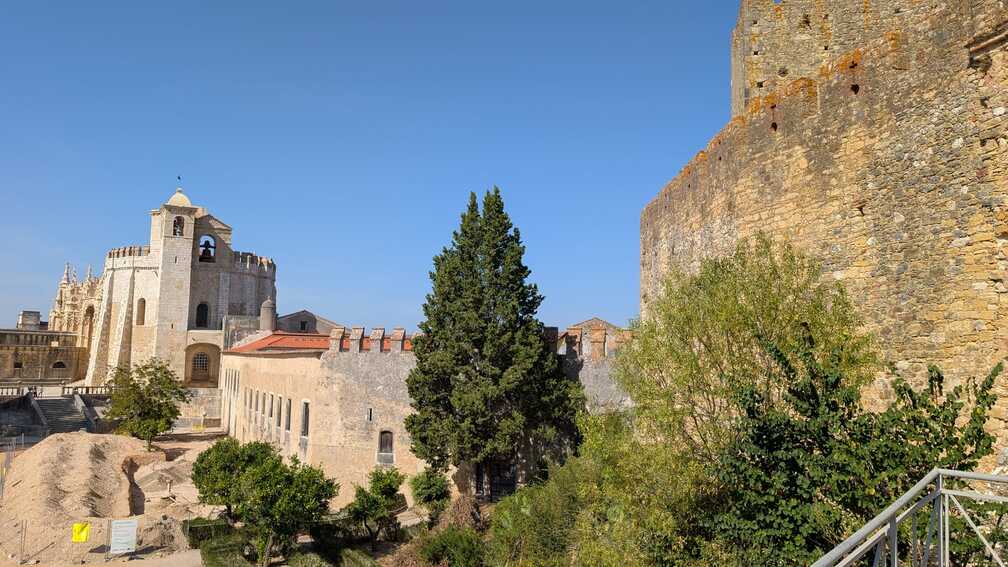
Inside the fortress were a small force of Templar knights and local defenders led by Gualdim Pais. The odds were heavily against them.
Yet the castle held.
Using the fortress’s innovative defences, including a sloping wall known as the “alambor”, defenders could fire down on attackers while making it difficult for siege engines to approach.
After several days of assault, the Almohad army withdrew.
Tomar had survived—and the legend of the Templars in Portugal grew.
The Fall of the Templars in Europe
By the early 14th century the Templars had become extremely wealthy. Their power made kings nervous.
One of those kings was Philip IV of France.
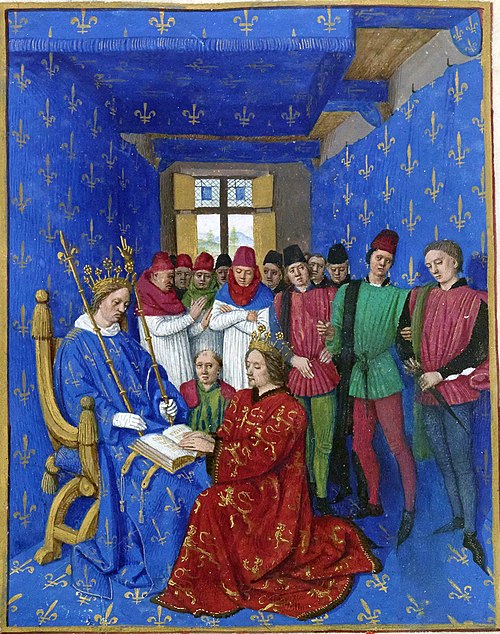
Deep in debt to the order, Philip orchestrated a dramatic crackdown. On Friday 13 October 1307, Templars across France were arrested, accused of heresy, and tortured into confessions.
This event helped create the modern superstition surrounding Friday the 13th.
Under pressure, Pope Clement V dissolved the order in 1312.
Across much of Europe, the Templars disappeared.
But not in Portugal.
The Knights of Christ: A Clever Survival
Portugal’s king at the time, Denis of Portugal, knew the Templars had played a crucial role in defending the kingdom.
Rather than destroy them, he found a political solution.
In 1319, the Templars were reorganised into a new order called the:
Order of Christ
The knights, lands, castles, and wealth effectively stayed the same—only the name changed.
Tomar became the headquarters of the new order, and the Convent of Christ expanded into the vast complex we see today.
The Templars had survived by transforming themselves.
Secrets and Mysteries of the Templars
The Knights Templar have inspired centuries of speculation, legend, and conspiracy.
Some of the mysteries linked to Tomar include:
Hidden Symbols
Within the Convent of Christ, visitors can find Templar crosses, strange carvings, and geometric symbols that some believe hold secret meanings.
Secret Tunnels
Local legends claim that underground tunnels run beneath Tomar, allowing knights to escape the castle or move unseen during sieges.
While some passages exist, the full network remains uncertain.
Hidden Treasure
One of the most enduring myths is that the Templars hid treasure—possibly gold, sacred relics, or lost documents—when the order was suppressed.
Some believe that Portugal’s remote castles were the perfect place to hide such secrets.
The Holy Grail?
More dramatic legends suggest the Templars guarded the Holy Grail or secret knowledge discovered in Jerusalem.
There is no historical evidence—but the myth persists.
From Crusaders to Explorers
The Order of Christ would later play an unexpected role in world history.
Its most famous Grand Master was Henry the Navigator.
Under his leadership, the order helped finance Portugal’s Age of Discovery. The red cross seen on Portuguese caravels sailing to Africa, India, and Brazil was the cross of the Order of Christ, the spiritual descendant of the Templars.
In this way, the legacy of the Templars did not end in medieval battles.
It helped launch the voyages that connected the world.
The Legacy in Tomar Today
Today, Tomar remains one of the most important Templar sites in the world.
Walking through the Convent of Christ, you can still see:
- The Templar Charola
- Medieval fortress walls
- Secret stairways
- Manueline windows rich with symbolism
Few places preserve the atmosphere of the Templar age so vividly.
And whether the stories of hidden treasure or secret knowledge are true or not, one thing is certain:
In Tomar, the shadow of the Knights Templar never really disappeared.